
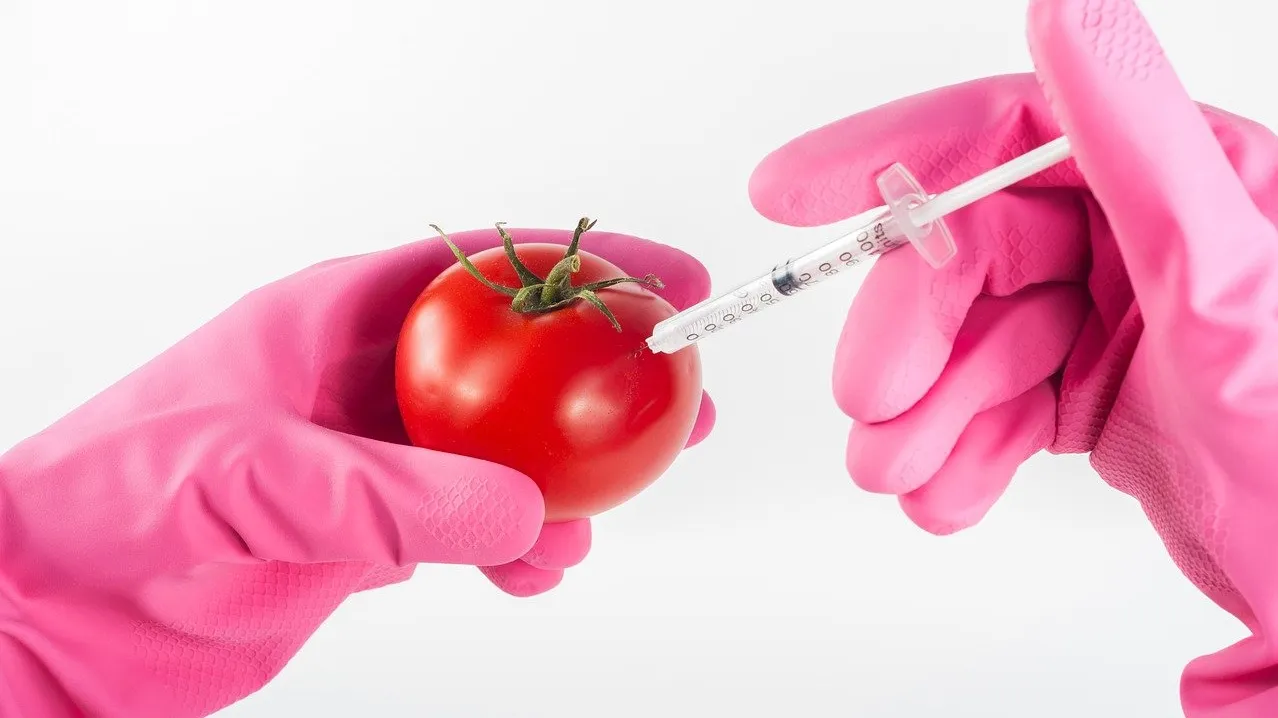
If you are on the path to a healthier lifestyle, then you have most likely been hearing about the debate surrounding GMOs and their danger to the U.S. food supply. In this article I will present a basic outline of what GMOs are, why they are harmful to your health and what alternatives are available. I can only skim the surface of this issue that is of vital importance to everyone who consumes food grown in the United States. I recommend that you take the time to find out more about GMOs and make sure that you eliminate them from your diet as much as possible in the interest of your health.
What are genetically modified organisms (GMOs) or also called genetically engineered organisms (GEOs)?
The World Health Organization (WHO) defines genetically modified organisms (GMOs) in this way: “Genetically modified organisms (GMOs) can be defined as organisms (i.e. plants, animals or microorganisms) in which the genetic material (DNA) has been altered in a way that does not occur naturally by mating and/or natural recombination.” Food scientists use genetic engineering to transfer the genes from one organism to another and between species that are not related.
GMO foods are produced in order to give some kind of perceived advantage to the food producer or consumer, as the WHO describes. This advantage might take the form of protection of the crop from pests, herbicides and diseases which would give that food a higher yield, crops that stay fresh longer or have a higher nutritional value.
Which fruits and vegetables are genetically modified in the United States?
Because the US Food and Drug Administration (FDA) does not require that genetically modified foods be labelled as such, the Non-GMO Project was founded to protect U.S. consumers from GMO foods and food products. The Non-GMO Project is a third party verification and labeling organization which helps consumers distinguish between GOM and non-GMO foods in the grocery store. According to the Non-GMO Project, about 90% of the following crops grown in the U.S. are GMOs:
- Alfalfa
- Cotton
- Canola
- Corn
- Soy
- Papaya
- Sugar beets
- Zucchini
- Summer squash
According to the latest news, USDA (United States Department of Agriculture) recently approved GMO apples and promises to move forward with genetically modified peaches, cherries and pears.
At the root of the whole GMO controversy is a company called Monsanto. Monsanto is one of the world’s largest seed producers in the world, but the seeds they produce are genetically engineered and modified to withstand pests and diseases and pesticides and herbicides such as Roundup, which is oddly enough produced by the same company. The genetically engineered seed was designed to withstand, Roundup, and they are sterile, which means that farmers are forced to keep buying their seed season after season from Monsanto.
Why are GMOs dangerous?
The Institute for Responsible Technology has published an article, 10 Reasons to Avoid GMOs, which quite thoroughly covers all of the reasons to avoid buying and consuming GMO foods where you can avoid it. The simple message is that GMOs are unhealthy for human beings and they harm the environment.
What is the solution?
If you are concerned about the dangers of genetically modified organisms in the food supply the most obvious option is to support organic farming by purchasing organic produce whenever possible. Visit your local neighborhood farmer’s market in the summer and fall, buy organic at the grocery store and investigate local CSA’s (Community Supported Agriculture) which will often deliver fresh produce to your door, or to a drop-off point in your neighborhood.
In the IRT article referred to above, they mention the following: “By avoiding GMOs, you contribute to the coming tipping point of consumer rejection, forcing them out of the food supply.” So, while you think that buying organic doesn’t make that much of a difference, it absolutely does.
Growing your own food is another way to avoid GMOs. If you have anywhere from a small patch of grass in a sunny backyard, to space on your deck for a few pots you can grow vegetables that will feed your family with fresh, organic produce. If you live in an apartment in the city, investigate community gardens in your neighborhood.
Finally, it is vital that you do your own research and find out what is going on with the foods you consume every day. I have included links to two powerful videos and other websites that have lots of information about the dangers of GMOs. Find out more about GMOs, start to replace the GMO foods that you are purchasing now with organic foods, and tell your family and friends what you are learning so that they can be informed and live healthier, more vibrant lives by eating healthy, whole foods.
Resources:
Seeds of Death: Unveiling the Lies of GMOs – Full Movie
Top 10 GMO Foods to Avoid
http://www.fda.gov/food/foodscienceresearch/biotechnology/ucm346030.htm
http://www.greenpeace.org/international/en/campaigns/agriculture/solution-ecological-farming/